
Visualization Student Dhruv Rathod And Team Earn Honors At MIT Reality Hack 2025
Rathod created a project titled “VR Passport," designed to transport people to a place or city virtually. The project earned the AeroSpatial Exploration Track Award.
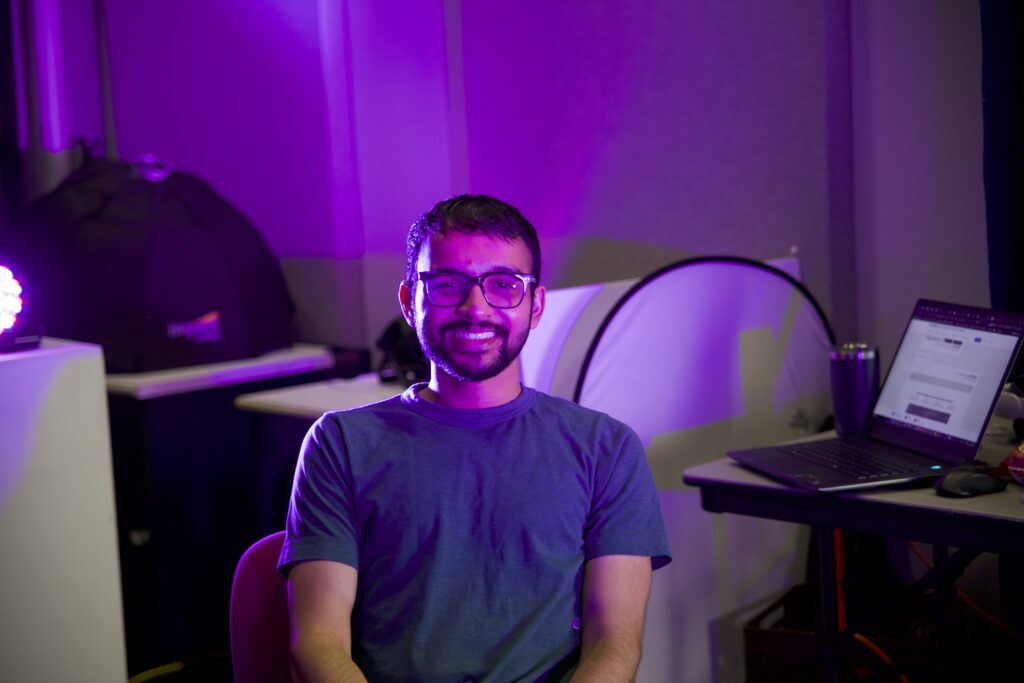
Visualization student Dhruv Rathod earned high honors for a project he created at an annual hackathon at the Massachusetts Institute of Technology in Boston in January.
The second-year Master of Science student attended MIT Reality Hack 2025, an experimental technology hackathon where participants build augmented and virtual reality projects from scratch in just 54 hours. Rathod’s travel costs were helped by a $700 grant from the Visualization Graduate Program Awards Committee.
Drawing from his personal in-flight experiences and conversations with a representative from Turkish Airlines, Rathod created a project titled “VR Passport.” The objective is to transport people to a place or city virtually, he said. Passengers use virtual reality headsets and can choose to explore their destination, learn about cities along the flight path, be transported to a virtual meditation garden or enjoy other virtual experiences, Rathod said. The project earned the AeroSpatial Exploration Track Award.
“Just three days before traveling to Boston, I had flown from India to Houston, which meant my memory of traditional in-flight entertainment systems was still fresh,” Rathod said. “My vision was to create a more immersive, private and engaging experience for passengers while also bringing value to the airline industry.”
The event brings together extended reality experts from around the world to collaborate, experiment and push the boundaries of immersive technology, Rathod said. Participants can attend workshops, form interdisciplinary teams and develop prototypes for judging by a group of industry leaders.
“MIT Reality Hack 2025 was more than just a hackathon — it was an opportunity to grow, innovate and connect with the global XR community,” Rathod said. “Stepping out of my comfort zone was worth it. I had to network, pitch and build a team from scratch.”
Rathod arrived with the aerospace-related XR idea, but finding teammates wasn’t easy. A self-described introvert, he was nervous to pitch “VR Passport” to others, but was able to fill the required five-person team just before the deadline.
The four team members —Yawen Xiao, Ruotong Cui, Justin Fanzo and Shuixin Wang — are designers, while Rathod is a developer. The team prioritized user experience and design over complex code.
“With the guidance of mentors, we refined our concept and built ‘VR Passport,’” Rathod said. “The hackathon was intense with late nights, debugging issues and last-minute changes. But by the end, we had a working prototype that we were proud of. Seeing people interact with ‘VR Passport’ and enjoy the experience was incredibly rewarding.”
Rathod said he is grateful to Courtney Starrett, M.F.A., associate professor, and to the Visualization Graduate Program Awards Committee for believing in his potential. He said receiving the grant turned his dreams into a reality.
“As an international student pursuing my master’s in Visualization, managing travel expenses and finances is always challenging,” he said. “Attending MIT Reality Hack 2025 was a dream, but without financial support, it would have been difficult to make it happen.”